South Florida roofing decisions carry real consequences that homeowners in most other states simply don't face. The combination of hurricane-force winds, coastal salt air, unrelenting UV exposure, and one of the strictest building code environments in Florida for hurricane-prone areas means that a south florida roofing project requires a level of preparation that goes well beyond calling a few contractors and comparing prices. At Infinity Legacy, we work with Florida homeowners across the state, and the questions we hear from South Florida property owners are always the same: What material should I use? What will this cost? How do I avoid getting scammed after a storm? This guide answers all of it, directly, so you can walk into any roofing conversation with confidence.
Why South Florida roofing demands a completely different approach
The conditions that wear out ordinary roofs fast
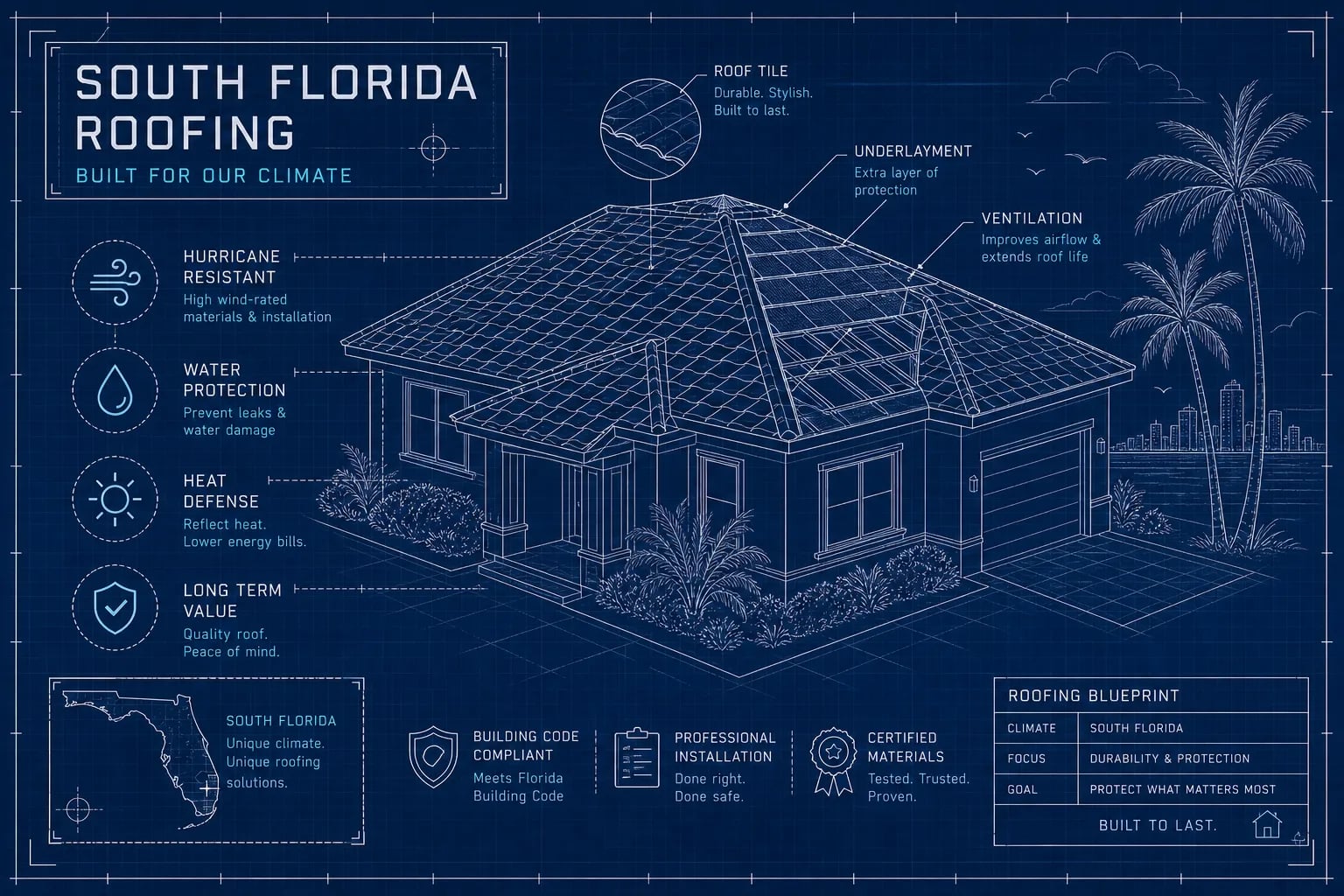
South Florida isn't just "Florida roofing with higher winds." It's its own category. Four compounding stressors shorten roof life here faster than almost anywhere in the country: hurricane-force winds that test every fastener and seam, coastal salt air that accelerates corrosion in metals and adhesives, year-round UV radiation that degrades standard shingle materials faster than cooler northern climates, and persistent humidity that drives moisture intrusion at the roof deck level and feeds mold. A system rated "hurricane resistant" in Texas or the Carolinas doesn't automatically qualify here because the HVHZ test conditions, installation specifications, and material chemistry requirements follow stricter standards under Miami-Dade's NOA program.
What the High Velocity Hurricane Zone actually changes for your project
Miami-Dade and Broward Counties fall under the High Velocity Hurricane Zone (HVHZ) designation, which is a separate code jurisdiction within the Florida Building Code. Every roofing product used in these counties must carry a Miami-Dade County Notice of Acceptance, or NOA, proving it has passed HVHZ-specific large-missile impact, cyclic wind pressure, and water-resistance testing. Miami-Dade typically requires three staged inspections for a full re-roof, and enhanced plan review means permit timelines run longer. Per the Florida Building Code 9th Edition, the wind design threshold in Miami-Dade is 175 mph and 170 mph in Broward, which is why HVHZ roofing requires contractors with specific product knowledge, not just a general Florida license.
South Florida roofing materials that actually hold up
Standing seam metal: the strongest option available
Standing seam metal delivers the best overall hurricane and coastal performance of any common roofing material. Properly specified systems carry wind ratings of 150 to 180 mph, handle salt air and UV exposure better than alternatives, and resist mold and rot. Lifespan runs 40 to 70 years when the correct metal alloy and fasteners are used for coastal exposure. The tradeoffs are a higher upfront cost and susceptibility to denting from heavy debris in a severe storm.
Concrete and clay tile: proven durability with weight considerations
Tile is a very common residential roofing choice in South Florida, and for good reason. Concrete tile offers a 30 to 50 year lifespan, and clay tile can last 50 to 100 years or more. For hurricane performance, mechanical fastening and HVHZ-approved underlayment are non-negotiable requirements, not optional upgrades. Tile adds significant dead load to the structure, so older homes may need a structural assessment before installation. When installed correctly, tile is a proven coastal performer.
Impact-resistant architectural shingles: the budget-conscious option
Class 4 impact-resistant shingles offer meaningful storm protection at the lowest cost entry point of the major material options. Their practical lifespan under South Florida conditions runs 15 to 25 years, shortened by the same UV, heat cycling, and humidity that affect all asphalt-based products in this climate. Homeowners comparing shingles to tile or metal should factor the shorter replacement cycle into the true long-term cost, not just the initial installation price.
TPO membrane systems for flat and low-slope roofs
TPO is the standard membrane choice for the flat and low-slope roofs common on South Florida commercial and mixed-use properties. A well-installed TPO system lasts 15 to 25 years and performs well as an energy-efficient, reflective roofing surface. Performance depends heavily on seam quality, attachment method, and regular maintenance, skipping upkeep on a membrane roof can cut that lifespan by years and lead to costly deck repairs.
South Florida roofing replacement costs (2026)
Material-by-material cost ranges on a typical 2,000 sq ft home
Here are the realistic installed cost ranges for a standard 2,000 square foot south florida roofing project in 2026. Figures are drawn from current regional pricing data for Miami-Dade, Broward, and Palm Beach counties:
- Asphalt shingles: $11,000 to $17,000
- Concrete/clay tile: $18,000 to $42,000 depending on tile type and roof complexity
- Standing seam metal: $19,000 to $32,000
- TPO flat roof systems: $10,000 to $28,000 depending on scope and detailing
These figures apply to a standard footprint with a relatively straightforward roofline. Complex hip-and-valley designs, multiple stories, and elevated permit and inspection fees can push totals higher. Treat any bid that falls significantly below these ranges as a reason to ask more questions, not a reason to sign quickly. When requesting roofing estimates in South Florida, always ask for fully itemized breakdowns so you can compare bids on equal terms.
Why South Florida prices run higher than the state average
Several cost drivers are specific to coastal South Florida counties. HVHZ product approval requirements mean only NOA-certified materials qualify, and those materials carry a premium over non-HVHZ alternatives. Permit and inspection fees are more extensive than in other Florida counties, and the multi-stage inspection process adds coordination time. Labor costs in Miami-Dade, Broward, and Palm Beach reflect the specialized knowledge and market demand the region requires. When storm damage is involved, a correctly filed insurance claim can offset a significant portion of the project cost, which makes thorough documentation before the adjuster visit critical.
Florida building codes and what your contractor must prove
Licensing requirements every Florida roofer must meet
Florida issues two types of roofing contractor licenses: a Certified Roofing Contractor, valid statewide, and a Registered Roofing Contractor, limited to a specific local jurisdiction. Certified contractors must document four years of qualifying experience, pass the Roofing Trade Knowledge and Business and Finance exams, submit fingerprints, demonstrate financial responsibility, and carry both liability insurance and workers' compensation coverage. Verify any contractor's license number on the Florida DBPR website before signing anything, a few minutes spent on that lookup eliminates a large category of risk. When searching for local roofing companies, cross-referencing the DBPR database is the fastest way to separate licensed South Florida roofers from unlicensed operators.
HVHZ product approvals, permits, and the 9th Edition FBC
As of January 1, 2026, all roofing permits must comply with the Florida Building Code 9th Edition, which includes sealed roof deck requirements for full re-roofs. In Miami-Dade and Broward, every roofing product must carry a valid NOA that is active at the time of permit submission and during construction. Any contractor who suggests that pulling permits is optional on a full roof replacement is a red flag worth acting on immediately. Unpermitted work in the HVHZ puts your insurance coverage, your certificate of occupancy, and your home's resale value at risk.
Filing a roof insurance claim in Florida without leaving money on the table
What to document before you call your insurer
The documentation you gather in the first 24 to 48 hours after a storm is the foundation of your claim. Take dated photos and video of all exterior roof damage, gutter damage, and any interior water stains or intrusion points. Save every receipt for emergency tarping or temporary repairs, and record the storm date with a weather service timestamp to tie the loss event to your claim. A written inspection report from a licensed roofer that details the damage scope will carry weight with your adjuster. Under Florida's post-2022 insurance reforms, policies issued after December 16, 2022 generally allow one year from the date of loss to file, but waiting reduces your leverage considerably.
Working the adjuster inspection to your advantage
Having a licensed roofer on-site during the adjuster's inspection is one of the most practical steps you can take to protect your claim. Adjusters work quickly, and damage that isn't documented during the inspection is difficult to add later. A strong contractor estimate should include itemized materials, labor charges, detailed work specifications, and projected start and completion dates. If the insurer's estimate and the contractor's scope differ significantly, that gap is grounds for a supplemental claim. Compare both documents carefully before accepting any settlement.
10 questions to ask before you hire a South Florida roofer
Run every contractor you're considering through these questions. Qualified roofing contractors in South Florida answer all of them without pause.
- What is your Florida license number, and can I verify it on DBPR?
- Are you familiar with HVHZ product approval requirements for this county?
- Can you provide proof of liability insurance and workers' compensation coverage?
- Do all the materials you plan to use carry valid NOAs for this jurisdiction?
- Who pulls the permit, you or the homeowner?
- What manufacturer warranty comes with the system, and what workmanship warranty do you offer separately?
- What is the realistic timeline from permit submission to final inspection?
- What is your payment schedule, and what percentage is due before work begins?
- Can you provide at least two verifiable local references on projects similar in scope to mine?
- If the insurance payout falls short of the actual project scope, how do you handle supplement claims?
Questions one through four alone will eliminate most unqualified bids. Question eight matters because any contractor demanding full payment upfront before work begins is a warning sign. Storm chasers, out-of-state contractors who appear after hurricanes with no local permit history and high-pressure "today only" pricing, will struggle to answer questions one, two, four, and ten. Any contractor with a documented track record across Florida's code requirements will work through every one of these questions directly and in detail.
Making the right call on your roof
Residential and commercial south florida roofing doesn't have to be a stressful process when you approach it with the right information. The decisions that carry the most weight are straightforward: choose a material engineered for coastal hurricane exposure, understand what Florida's building code requires from your contractor and your project, and verify credentials before anything gets signed. The 10-question checklist above isn't a formality. Homeowners who use it systematically reduce their exposure to the scams, substandard work, and permit violations that cause the most expensive problems after a project is done.
At Infinity Legacy, we are a licensed and insured Florida contractor (license CGC1540795, verifiable at the Florida DBPR) serving homeowners and commercial property owners across South Florida and beyond, with roofing systems built specifically for Florida's climate demands. We offer free south florida roofing estimates, honest guidance on material selection and insurance claims, and PACE financing with no down payment for qualified upgrades. If your home or building needs attention, contact Infinity Legacy for a straight answer on what your project actually requires.