If you've ever gotten three quotes for a Florida roof replacement and ended up with three wildly different numbers, you're not alone. One contractor says $14,000. Another says $28,000. A third hands you a single figure on a piece of paper with no breakdown at all. In Florida markets, bids commonly vary by 20 to 50 percent, and without a baseline, you have no way to know which quote is fair, which is cutting corners, and which is simply overcharging.
So how much should you expect to pay for a full roof replacement in Florida in 2026? The answer comes down to three core variables: the material you choose, the size and complexity of your roof, and where in the state you live. After years of replacing roofs across Northeast and Central Florida, one thing is clear: homeowners who understand the cost drivers before calling a contractor get better quotes and make smarter decisions. This article gives you real 2026 price ranges by material, a breakdown of what actually inflates a quote, and the exact questions to ask before you sign anything. By the end, you'll have a realistic budget range and a clear path to financing and insurance savings most homeowners don't know about.
How Much Should I Expect to Pay for a Full Roof Replacement in Florida in 2026?
The single most important thing to understand about roofing quotes is that installed cost and material cost are not the same number. Every range below reflects the full installed price: labor, materials, tear-off of the existing roof, and standard disposal. This is the number that matters when you're budgeting.
The 2026 Price Ranges by Material Type
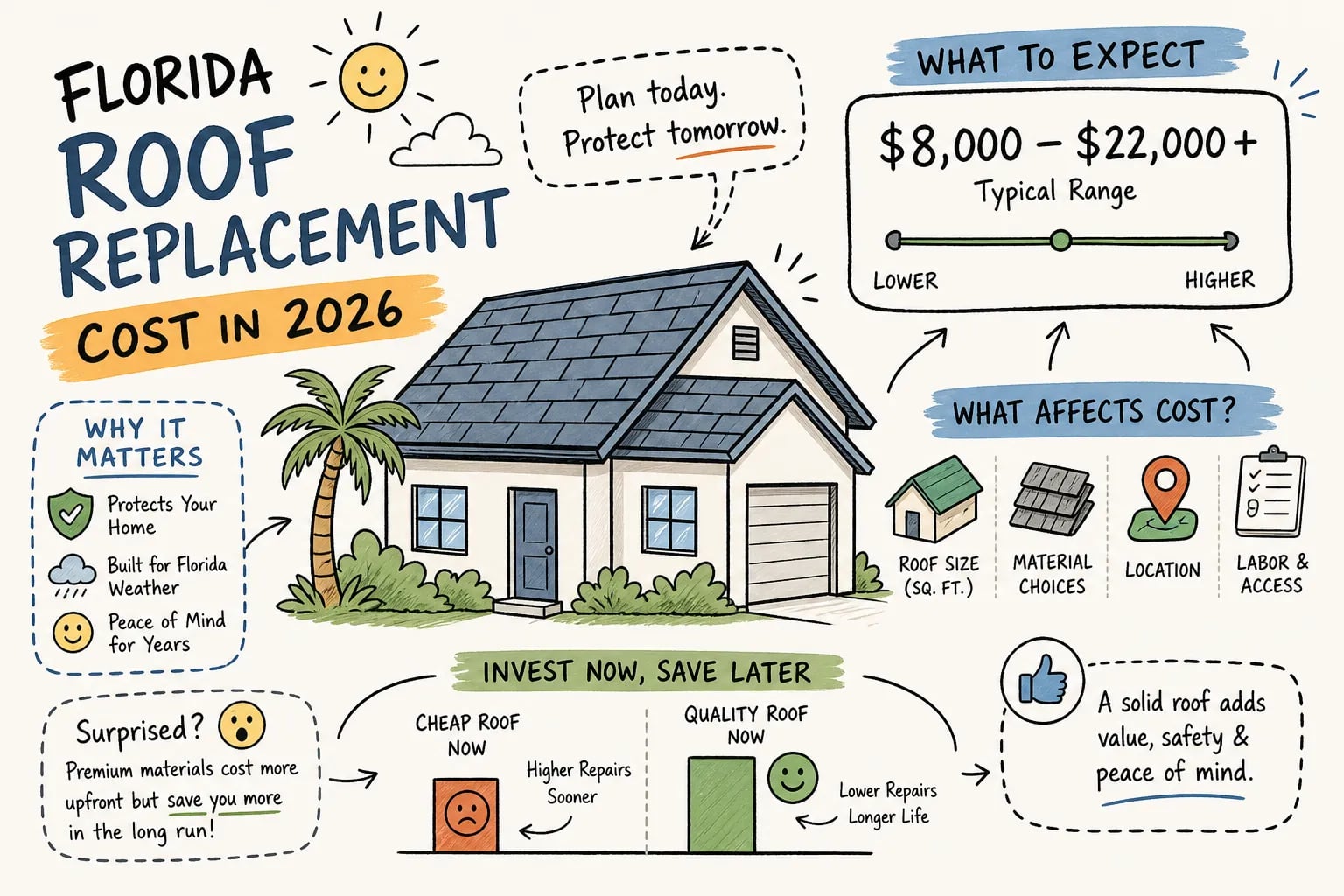
Asphalt shingles remain the most common choice for Florida homeowners and typically run $10,000 to $20,000 total, or roughly $5 to $9 per square foot installed. Metal roofing covers a wider range because of the many system types available: expect $16,000 to $38,000, or $9 to $19 per square foot installed. Concrete and clay tile sit at the top of the price ladder at $22,000 to $50,000 or more, roughly $10.50 to $21 per square foot installed. These ranges reflect current 2026 Florida market pricing compiled from roofing industry guides and contractor data across the state's major regions.
These ranges aren't arbitrary. They reflect the material cost, the labor intensity of each system, and what Florida's climate actually demands from a roof. A basic three-tab shingle and a standing-seam metal panel require completely different installation methods, and that difference shows up in the final number.
Why Florida Tends to Cost More Than the National Average
Florida's building code requirements, hurricane season exposure, and year-round demand for roofing work all push prices higher than what you'd see in the Midwest or the Pacific Northwest. Licensed contractors here must carry specific insurance, use approved materials, and pull permits for every replacement job. A Florida roofer billing at $55 to $74 per hour isn't gouging you. That rate covers workers' comp, liability insurance, code-compliant fastening, and permit administration, and that compliance is what keeps your home insurable and your permit card signed off by the county inspector when the job is done.
How Your Home's Size and Roof Complexity Change the Total Bill
A 2,000 square foot house does not have a 2,000 square foot roof, and this disconnect confuses a lot of homeowners when they start getting quotes. Your roof's actual surface area depends on its pitch, its overhangs, and how many geometric shapes it contains. Depending on pitch and geometry, the actual roof surface area typically runs 10 to 40 percent larger than the home's floor plan, and on steep, complex roofs, that gap can be even wider.
Roof Squares, Square Footage, and Why They're Different
Roofing contractors price by the "square," which is simply 100 square feet of roof surface. A 2,000 square foot home with a moderate pitch likely has 22 to 28 roofing squares once you account for the geometry. That's the unit your contractor is working from, and it's the unit that should appear on your quote so you can compare bids accurately.
To give you a practical anchor: a small home around 1,200 square feet of floor space might have 15 to 20 roofing squares and fall in the $8,000 to $18,000 range for asphalt shingles. A mid-size 2,000 square foot home typically has 22 to 28 squares and runs $10,000 to $22,000 for shingles, $18,000 to $40,000 for metal, or $24,000 to $50,000 for tile. A larger home around 2,800 square feet can exceed those upper ranges depending on complexity and location.
How Pitch and Complexity Add to the Cost
Steeper roofs require more safety rigging, slower crew movement, and increased labor time. In practice, steep and complex roofs fall at the higher end of Florida's labor rate range of $2.50 to $5.00 per square foot, and that premium is legitimate. Complex roof shapes with multiple valleys, dormers, and hip sections cost more to flash and waterproof than a straightforward gable roof. Every inside corner and transition point is a potential failure zone, and flashing those correctly takes skilled labor time.
Flat and low-slope commercial roofing systems are a separate category, using different materials such as TPO, modified bitumen, or built-up roofing, priced on a different structure. If you manage a commercial property in Florida, residential square-foot pricing won't apply, reach out directly for a commercial assessment.
Florida Roofing Prices by City and Region: What Changes and Why
Your zip code affects your roofing quote more than most homeowners realize. The same material on the same size roof can cost 20 to 30 percent more or less depending on which Florida market you're in, and one specific reason explains most of that gap.
South Florida: Miami-Dade, Broward, and the HVHZ Premium
Miami-Dade and Broward counties sit inside Florida's High Velocity Hurricane Zone, commonly called the HVHZ. This designation means roofing products must carry specific Miami-Dade Notices of Acceptance, underlayment requirements are stricter (self-adhering peel-and-stick systems over the entire deck for slopes of 2:12 or greater), and installation must meet more intensive fastening and inspection standards. The result is the most expensive roofing market in Florida.
In Miami-Dade, architectural shingles typically run $14,000 to $26,000, standing-seam metal reaches $30,000 to $55,000, and tile systems can land between $35,000 and $70,000 or more for a typical single-family home. Broward prices track very close to Miami-Dade because the HVHZ rules apply equally there. Palm Beach sits below Broward but still carries a South Florida labor premium over the rest of the state.
Central and Northeast Florida: More Competitive Pricing
Tampa Bay, Orlando, and Jacksonville are generally 20 to 30 percent less expensive than South Florida for the same roof type and size. These markets aren't subject to HVHZ requirements, but the Florida Building Code still applies statewide, so quality and wind-resistance standards remain meaningful. The code compliance burden is lower, and labor rates in these regions are more competitive.
Northeast Florida, including Jacksonville, St. Augustine, Palm Coast, and Daytona Beach, tends to offer some of the most competitive contractor pricing in the state. City-level roofing labor rates range from roughly $55 per hour in Jacksonville to $62 per hour in Miami, which is a real difference when a full replacement requires 40 to 80 or more labor hours spread across a crew. For homeowners in this region, that gap works in your favor.
The Add-On Costs That Inflate Your Quote (and What Each One Means)
Every roofing quote starts with a base price, but the final number almost always includes line items beyond materials and basic labor. Understanding what these add-ons represent helps you evaluate whether a quote is complete and competitive.
Tear-Off, Disposal, and Structural Repairs
Tear-off and debris disposal typically adds $1 to $3 per square foot, which works out to roughly $1,000 to $3,500 on an average Florida home. Most full-replacement quotes include this, but confirm it explicitly before signing. The bigger financial wildcard is decking damage discovered after tear-off begins.
Damaged or soft plywood decking costs $2 to $5 per square foot to replace, and older Florida homes frequently have sections that won't pass inspection without repair. In our experience replacing roofs across Northeast and Central Florida, it's common to find 2 to 5 sheets of decking that need replacing on a typical job. Budget a contingency of $400 to $4,500 depending on your home's age and history of leaks. Deck damage often can't be confirmed until the old roof is off, so treat it as a contingency line rather than a surprise.
Permits, Underlayment Upgrades, and Hurricane Code Compliance
Permit fees vary by county. Most Florida counties run $150 to $600 for a residential reroof, though some municipalities push closer to $1,000 depending on project scope. Miami-Dade calculates fees per square foot of roof area, with totals typically capping around $678 for standard residential projects, confirm the current fee schedule with your local building department, as rates can change. Always verify whether the permit is included in your quote and that the contractor is pulling it in their own name. A contractor who asks you to pull your own permit is not a contractor you want on your roof.
Underlayment upgrades matter more in Florida than nearly anywhere else. A standard synthetic underlayment is the baseline, but a self-adhering peel-and-stick system adds $0.75 to $1.50 per square foot over basic synthetic and significantly improves wind and water resistance during a storm. Hurricane code upgrades, including sealed roof deck work, enhanced fastening patterns, or improved roof-to-wall connection straps, can add $500 to $3,500 to the project total. In certain jurisdictions these upgrades aren't optional. A clean, trustworthy quote breaks all of these out as line items, not a single lump sum.
Asphalt vs. Tile vs. Metal: Which Material Actually Costs Less Over Time in Florida
Upfront price and lifetime cost are two different conversations. In Florida's climate, the material you choose now affects what you'll spend over the next 30 to 50 years, and the math doesn't always favor the cheapest starting point.
Lifespan Differences That Change the Long-Term Math
Asphalt shingles realistically last 15 to 25 years in Florida given the heat, UV intensity, humidity, and wind exposure the material faces. Over a 40-year ownership period, that likely means one or two full reroof cycles on top of your original replacement. Tile roofs, clay or concrete, present a different picture: the tiles themselves can last 40 to 100-plus years, but the underlayment beneath them typically wears out in 15 to 25 years. That means a mid-life underlayment reset is a very real expense most tile homeowners don't anticipate when they initially budget for the roof.
Metal roofing, particularly standing-seam systems, typically lasts 40 to 70 years with minimal disruption. For long-term homeowners, metal is often treated as a one-and-done replacement: one installation that covers multiple asphalt replacement cycles without the tile's underlayment complication.
How to Think About Total Cost of Ownership
The cheapest upfront choice, asphalt, often costs the most over 40 years when you factor in replacement frequency, maintenance, and the compounding effect of labor prices rising with each subsequent reroof. Metal's higher upfront cost can pencil out over a long ownership period because a single installation covers what might otherwise require two or three asphalt reroofs.
For Florida homeowners planning to sell within 10 years, asphalt or entry-level metal may be the practical choice since resale value won't always recover a premium tile or standing-seam investment. For long-term owners, tile or metal changes the total cost equation significantly. Metal roofing's stronger wind mitigation credit potential also reduces insurance premiums year over year, compounding into meaningful savings over time.
What to Look For, and Watch Out For, in Contractor Quotes
Getting multiple quotes is smart. Knowing how to read them is what separates a homeowner who gets a great roof from one who gets a great-sounding price followed by a painful surprise.
The Anatomy of a Trustworthy Florida Roofing Quote
A legitimate Florida roofing quote itemizes everything: materials including manufacturer and product line, labor, tear-off and disposal, underlayment type and brand, permit fees, and any structural contingencies for decking. A single lump-sum number without line items makes it impossible to compare contractors accurately. You can't tell whether one quote is cheaper because the contractor is more efficient or because they left out the permits and underlayment upgrade the job actually requires.
Confirm the contractor holds an active Florida CCC or CGC license, carries general liability and workers' compensation insurance, and will pull all permits in their own name. These aren't bureaucratic formalities. They're the protections that cover you if a worker is injured on your property or if the roof fails inspection after installation.
Questions to Ask Every Contractor Before Signing
Walk every contractor through these before committing:
- What brand and wind rating is the roofing material, and does it have a current Florida Product Approval?
- What type of underlayment is included: synthetic or peel-and-stick self-adhering?
- How will decking damage be handled and priced if found during tear-off?
- Who pulls the permit, and is the permit fee included in this quote?
- What is the labor warranty period, and what is the manufacturer's product warranty?
- Is a wind mitigation inspection recommended after completion, and can you provide a referral to a certified inspector?
A confident, licensed contractor answers every one of these without hesitation. Vague answers or pushback on permit questions are red flags worth taking seriously before you hand over a deposit.
How PACE Financing and Insurance Credits Can Lower Your Out-of-Pocket Cost
Sticker shock from a roofing quote leads a lot of Florida homeowners to delay a replacement they genuinely need. Two underused options can change that calculation significantly.
Florida's PACE Program: Replacing a Roof With $0 Down
Property Assessed Clean Energy financing, known as PACE, allows Florida homeowners to fund a full roof replacement with no money down and no traditional credit check. Instead of a loan, the repayment is structured as a non-ad valorem assessment attached to the property tax bill. Approval is based on property equity, tax payment history, and mortgage standing, not a credit score. Repayment terms typically run 5 to 25 years depending on the program and project scope.
Qualifying roof-related improvements include full replacements, hurricane mitigation upgrades, and energy-efficiency improvements that meet Florida Building Code standards. Because the assessment is attached to the property rather than the borrower, it generally transfers with the home if you sell before the term ends. At Infinity Legacy, we make PACE financing part of the free estimate conversation. Homeowners can explore eligibility in the same appointment where they get their quote, no pressure and no upfront cost.
Wind Mitigation Inspections and Insurance Savings
A new hurricane-rated roof in Florida often qualifies for significant homeowners' insurance discounts when backed by a completed wind mitigation inspection report. According to Florida insurance guidance, homes built or reroofed to the 2001 Florida Building Code or later may be eligible for substantial discounts on the windstorm portion of their premium, in some cases up to 68 percent depending on construction features. Depending on the roof type, fastening pattern, underlayment system, and opening protection, real-world savings often reach hundreds of dollars per year. Some carriers apply wind mitigation credits that reduce the windstorm premium by 20 to 40 percent or more when features are stacked.
Metal roofing consistently produces strong insurance savings among the three primary material types, partly because of its impact resistance and partly because of how Florida carriers rate the roof covering category. Ask your contractor whether the installed system qualifies for a wind mitigation report and request a referral to a certified inspector after completion. That report costs a few hundred dollars and pays for itself quickly through annual premium reductions.
As a licensed multi-trade contractor (CGC1540795) based in Palm Coast and serving communities from Jacksonville and St. Augustine to Orlando, Daytona Beach, and beyond, Infinity Legacy builds every roof replacement to Florida code standards designed to support wind mitigation qualification. Free estimates come with clear, itemized pricing and a straightforward conversation about financing options before any commitment is required.
Frequently Asked Questions: Florida Roof Replacement Cost in 2026
How much should I expect to pay for a full roof replacement in Florida in 2026?
Most Florida homeowners pay between $10,000 and $50,000 for a full roof replacement in 2026, depending on material, roof size, and location. Asphalt shingles typically run $10,000 to $20,000, metal roofing $16,000 to $38,000, and tile $22,000 to $50,000 or more. South Florida properties in the HVHZ tend to fall at or above the upper end of each range.
Why are Florida roofing costs higher than the national average?
Florida's hurricane exposure, strict building code requirements, mandatory permitting, and year-round contractor demand all push installed costs above the national average. Licensed Florida roofers must carry specific insurance and use code-approved materials, costs that are built into competitive, legitimate quotes.
What add-ons should I expect beyond the base quote?
Tear-off and disposal ($1 to $3 per square foot), decking repairs ($2 to $5 per square foot where needed), permit fees ($150 to $600 in most counties), underlayment upgrades ($0.75 to $1.50 per square foot for peel-and-stick), and hurricane code compliance work ($500 to $3,500) are the most common add-ons. A trustworthy quote lists each as a separate line item.
Can I replace my Florida roof with no money down?
Yes. Florida's PACE (Property Assessed Clean Energy) program allows homeowners to finance a full roof replacement with no down payment and no traditional credit check. Repayment is structured as a property tax assessment, and terms typically run 5 to 25 years. Ask about PACE eligibility during your estimate appointment.
Getting Your Roof Replaced Without Guessing at the Price
Knowing how much you should expect to pay for a full roof replacement in Florida in 2026 is the first step toward making a confident, informed decision. Costs realistically range from around $10,000 for a basic asphalt shingle reroof on a smaller home to $50,000 or more for tile on a large South Florida property in the HVHZ. The spread between those numbers comes down to material choice, roof size and geometry, city, and the add-ons a specific job actually requires. None of that is unknowable before you start talking to contractors.
Use the ranges in this article as your baseline. Ask every contractor the questions listed above. Don't let a vague lump-sum quote serve as the basis for one of the largest investments you'll make in your home. And before you assume a new roof isn't in the budget, ask about PACE financing, for many Florida homeowners, a full replacement with $0 down and no credit requirement is more accessible than they realized.
Find out exactly how much you should expect to pay, reach out to the Infinity Legacy team for a free, no-obligation estimate. You get itemized pricing, PACE financing guidance, and a licensed contractor who knows Florida code from the ground up, all in one conversation. The next step costs you nothing.