Every week, Florida homeowners call us with the same question: "Should I go with shingles or metal when I replace my roof?" The shingle vs metal roof debate sounds like a simple material choice, but it's really a financial decision that plays out across decades of hurricane seasons, insurance renewals, and monthly power bills. At Infinity Legacy, we install both systems across Northeast and Central Florida, and we don't have a stake in which direction you go. What we do have is real data from real projects, and that's exactly what this comparison delivers.
This isn't a pitch for one material over the other. It's a straight look at upfront costs, lifespan, storm performance, energy savings, and maintenance so you can match the right roof to your actual situation, whether that's a tight budget, a coastal address, or a plan to stay in your home for 30 years.
Shingle vs Metal Roof: Upfront Cost Gap
The conversation usually starts here, and the gap is real. Understanding what drives it helps you evaluate whether the difference is worth it for your home.
What asphalt shingles cost to install in 2026
Installed architectural shingles in Florida typically run $4 to $8 per square foot in 2026. On a 2,000-square-foot roof footprint, that puts the total installed cost somewhere between $8,000 and $16,000 depending on the shingle tier, roof complexity, and labor rates in your market. Three-tab shingles come in at the lower end but are less common on new installs today. Architectural and dimensional shingles land in the middle range and represent the most common choice. Premium designer shingles push toward the top of that range and bring longer warranty coverage with them.
Metal roof cost per square foot and why the gap exists
Standing seam metal roofing runs $10 to $16 per square foot installed, and metal shingles come in between $10 and $18 per square foot. Stone-coated steel and aluminum shingle systems fall in that same range depending on the product. The higher number isn't just about materials. Metal requires specialized installation skills, different fastening systems, and longer labor time than shingles. On that same 2,000-square-foot roof, you're looking at $20,000 to $36,000 for a quality metal install.
That gap is real, and it's significant. But it's the starting point for the comparison, not the ending point. Once you factor in lifespan, the math shifts considerably.
How Long Each Roof Actually Lasts and What Warranties Really Mean
Lifespan is where the numbers stop favoring shingles. A warranty and a roof's real service life are two different things, and Florida's climate makes that distinction more important than anywhere else.
Shingle lifespan by type: what to realistically expect
Three-tab shingles in Florida typically last 15 to 20 years. Architectural and dimensional shingles stretch to 20 to 30 years with proper installation and attic ventilation. Premium designer shingles carry claims of 40 to 50 years, but Florida's UV intensity, heat, and storm exposure generally push real-world performance toward the lower end of that range. The "lifetime limited" warranty language you see on premium shingles is a marketing term, not a guarantee. Actual coverage is usually prorated and shrinks substantially well before the shingle reaches the end of its useful life.
Metal roof lifespan and how warranties are actually structured
Painted steel and Galvalume systems typically last 40 to 70 years. Aluminum and copper systems push to 60 years and beyond. Metal warranties usually split into two separate coverages: finish (typically 20 to 40 years) and weathertightness (typically 20 to 35 years). Neither number equals the roof's total useful life. The practical takeaway for Florida homeowners is this: on a 25 to 30-year ownership timeline, a shingle roof almost certainly requires one full replacement cycle. A metal roof installed today is likely still performing when you're ready to sell.
Storm Performance in a State Where Hurricanes Are a Real Threat
No section of this comparison matters more in Florida than this one. How a roof performs under high wind, driven rain, and coastal conditions has direct consequences for your safety and your insurance bill.
Wind resistance, hail, and coastal salt air
Standing seam metal roofing installed to Florida Building Code specs, including TAS 125 and UL 580 uplift testing standards, is rated for substantially higher wind uplift than standard asphalt shingles. Shingles are more vulnerable to tab lifting, blow-off, and granule loss under severe wind loads. On hail, the picture is more nuanced: metal can dent cosmetically but typically holds its waterproofing integrity. Class 4 impact-rated shingles narrow that performance gap considerably and are worth specifying if you go the shingle route.
Coastal exposure adds another variable. Aluminum standing seam with a quality PVDF finish handles salt air better than other metal options and is the right call for homes within a mile of the water. Galvalume performs well in moderate coastal exposure but becomes more maintenance-sensitive as you get closer to breaking surf.
Standard galvanized steel is generally not recommended for Florida coastal homes, particularly within that same one-mile proximity to open water where salt-air corrosion accelerates significantly. The material type matters, but so do the installation details: stainless fasteners, protected cut edges, and intact factory coatings are just as important as what the panel is made of.
How your roof choice affects your insurance premium
Florida insurers are actively repricing roof risk, and the direction is not favorable for aging shingle roofs. A metal roof with documented wind-mitigation certification typically qualifies for 15 to 30 percent off the wind portion of your homeowners premium. Standard asphalt shingles generally earn 5 to 15 percent in comparable credits, a gap of roughly 10 to 15 percentage points in metal's favor. The specific credit depends on the roof's wind rating, installation method, deck attachment, and your insurer's guidelines. Scheduling a wind mitigation inspection immediately after your new roof is installed is one of the fastest ways to capture those savings, most Florida insurers accept a certified inspection report as the basis for premium adjustments. Ask your contractor and insurer about their specific process.
Energy Efficiency and What It Does to Your Monthly AC Bill
Florida's cooling season runs the better part of the year. Any roofing material that reduces the heat load on your home has a measurable financial impact over time.
Energy-efficient roofing options: how reflective metal reduces heat gain
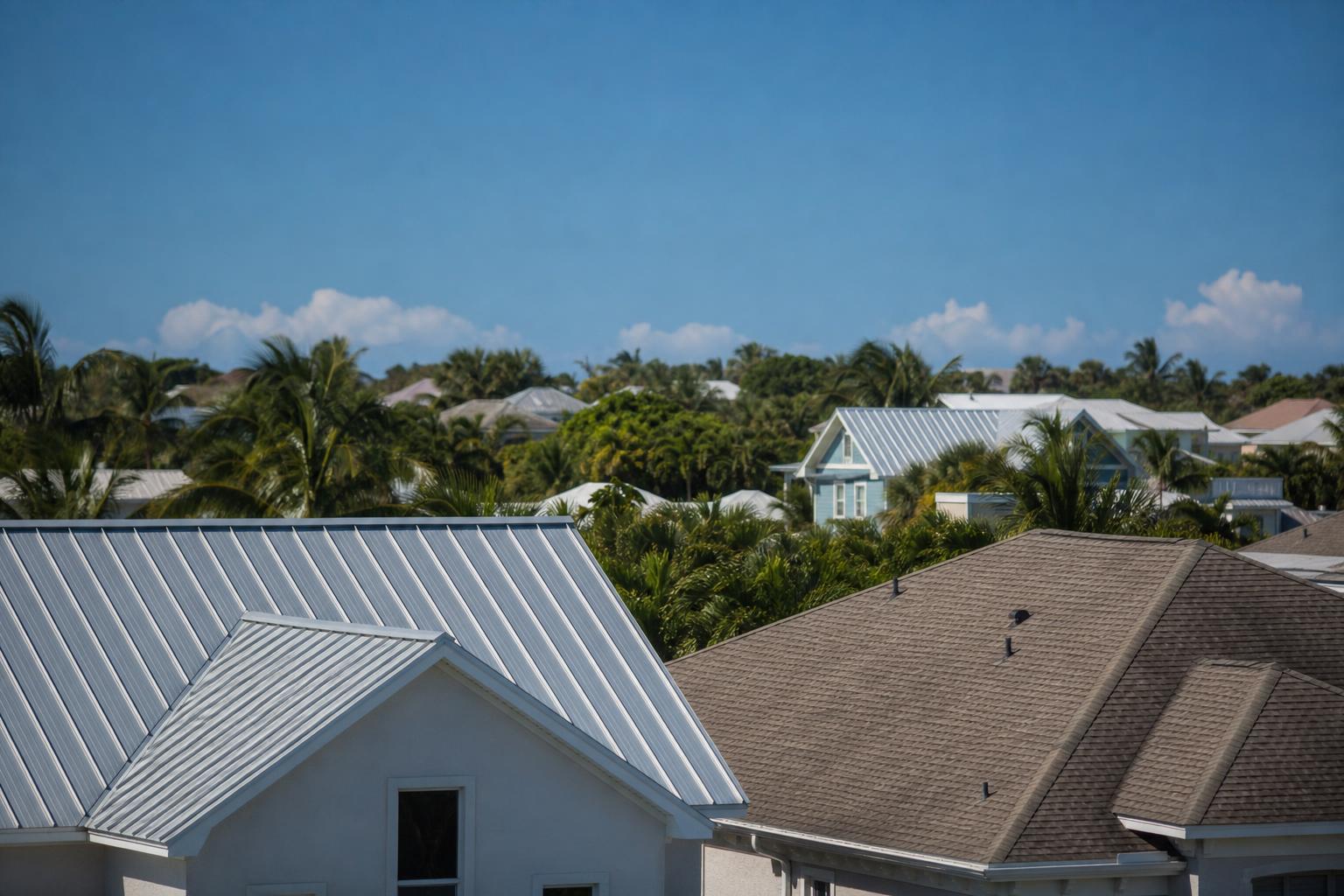
Research on South Florida homes indicates that white or highly reflective metal roofs can cut cooling energy use by 18 to 26 percent compared to dark asphalt shingles. One Florida-focused analysis found a white painted metal roof saved roughly 23 percent annually in cooling costs versus a dark gray shingle roof. In some tests, reflective metal roofs reduced peak cooling demand by 28 to 35 percent during the hottest hours of the day, exactly when utility rates are highest.
The mechanism is direct: reflective coatings bounce solar energy away before it heats the roof deck and pushes into the attic. Dark shingles absorb that energy and radiate it inward, making your HVAC work harder. Asphalt shingles can be specified in lighter colors with some reflective benefit, but they don't match the performance of a purpose-built cool-metal system. For Florida homeowners with high monthly power bills, this gap adds up to real money every year the roof is on the house.
Tax credits and incentives available in 2026
The ENERGY STAR roofing specification has been sunset, and the federal tax credit that previously applied to qualifying cool-metal roofing is no longer active in 2026. There is no current federal tax credit for a metal roof simply because it meets cool-roof specifications. Some utility rebates and state programs still apply in certain Florida markets, and PACE financing can offset the upfront cost of a qualifying metal roof upgrade with no money down. Before purchasing, ask your contractor which products carry current CRRC ratings and check with your utility provider about any active rebate programs in your service area.
Maintenance Reality and a Clear Decision Framework
Combining the maintenance comparison with a straightforward decision guide is where this choice gets practical. Both systems require attention, but they don't require the same kind.
What maintenance actually looks like for each system
Asphalt shingles need twice-yearly inspections, post-storm checks, gutter cleaning, algae treatment, and periodic re-sealing of flashing and any lifted tabs. Small issues like a cracked shingle or an open flashing joint need prompt attention because they escalate quickly into water intrusion and deck damage. Shingles also lose granules over time, which accelerates heat absorption and signals the roof is approaching end of life.
Metal roofs need twice-yearly inspections, annual cleaning, and monitoring for scratches or coating breaches that could allow corrosion to start. The overall maintenance burden is lighter, and repair events are less frequent across the roof's service life. For Florida homeowners navigating storm season every year, a lower-maintenance roof is a real quality-of-life difference, not just a financial one.
A practical framework for making the shingle vs metal roof call
If your priority is the lowest upfront cost and your plan is to stay in the home 10 to 15 years, architectural shingles with a Class 4 impact rating are a cost-effective, dependable choice. You get reliable storm performance without the upfront commitment of metal. If your priority is the lowest lifetime cost, maximum storm protection, best energy performance, and a roof you won't replace again, metal wins that analysis clearly. On resale, metal typically returns 60 to 85 percent of its cost versus 55 to 70 percent for architectural shingles, and market research suggests metal roofing can add 4 to 6 percent to Florida home values compared to the near-zero premium shingles tend to generate.
Budget-conscious homeowners should also look at PACE financing, which allows qualified Florida homeowners to upgrade to metal roofing with $0 down and no traditional credit requirement. Repayment runs through your property tax bill, making a higher-performing roof accessible without depleting savings or taking on a separate loan.
Getting both options quoted before deciding
The right answer depends on your home's size, pitch, deck condition, coastal exposure, and what your budget can realistically support. At Infinity Legacy, we install both shingle and metal roofing systems across Northeast and Central Florida, serving homeowners from Jacksonville and St. Augustine down through Daytona Beach and Orlando. We offer free estimates for both options so you can see real numbers side by side before committing to anything. A contractor who works with both materials has no reason to push you toward the more expensive option, the recommendation should come from your situation, not from the contractor's margin.
Shingle vs Metal Roof: The Bottom Line for Florida Homes
Both roofing systems are legitimate, quality solutions. The better choice depends entirely on your priorities and timeline. Shingles win on upfront cost. Metal wins on lifetime cost, energy savings, storm resilience, and insurance credits. Florida's climate, hurricane exposure, and long cooling season tilt the long-term math toward metal for homeowners who plan to stay put, but shingles remain a smart, practical option for the right buyer at the right budget.
When you're weighing the shingle vs metal roof decision for your specific home, the most useful thing you can do is get both options quoted side by side. Contact Infinity Legacy for a free estimate on either system. We'll walk you through the real cost difference over your expected ownership timeline and explain exactly how PACE financing works if you want the better-performing roof but need a practical way to get there.
Frequently Asked Questions: Shingle vs Metal Roof
How much more does a metal roof cost than shingles in Florida?
On a typical 2,000-square-foot Florida home, installed architectural shingles run $8,000 to $16,000. A comparable metal roof installation runs $20,000 to $36,000 depending on the system. The upfront gap is real, but metal's longer lifespan, lower maintenance costs, and insurance savings narrow that difference significantly over a 25 to 30-year ownership period.
Does a metal roof last longer than shingles in Florida's climate?
Yes. Architectural shingles in Florida realistically last 20 to 30 years. Metal roofing systems, particularly Galvalume and aluminum, typically perform for 40 to 70 years. Florida's UV intensity, heat cycling, and storm exposure accelerate shingle wear, which means most homeowners on a 25 to 30-year timeline will replace a shingle roof at least once before they would need to replace a metal roof.
Which performs better in hurricanes: shingles or metal?
Standing seam metal roofing tested to Florida Building Code standards is rated for higher wind uplift than standard shingles. Shingles are more prone to tab lifting and blow-off under severe loads. That said, Class 4 impact-rated shingles close the gap meaningfully and are the right spec if you go the shingle route in a high-wind zone.
Will a metal roof lower my homeowners insurance in Florida?
In most cases, yes. A wind-mitigation-certified metal roof typically qualifies for 15 to 30 percent off the wind portion of your Florida homeowners premium. Comparable shingle roofs generally earn 5 to 15 percent in credits. The exact amount depends on your insurer, the roof's wind rating, and your deck attachment method. Scheduling a wind mitigation inspection right after installation is the fastest way to lock in those savings.
Is there a tax credit for metal roofing in 2026?
No. The federal tax credit that previously applied to qualifying cool-metal roofing is no longer active in 2026. Some Florida utility rebates and PACE financing programs still apply. Check with your utility provider and ask your contractor about current CRRC-rated products before purchasing.