
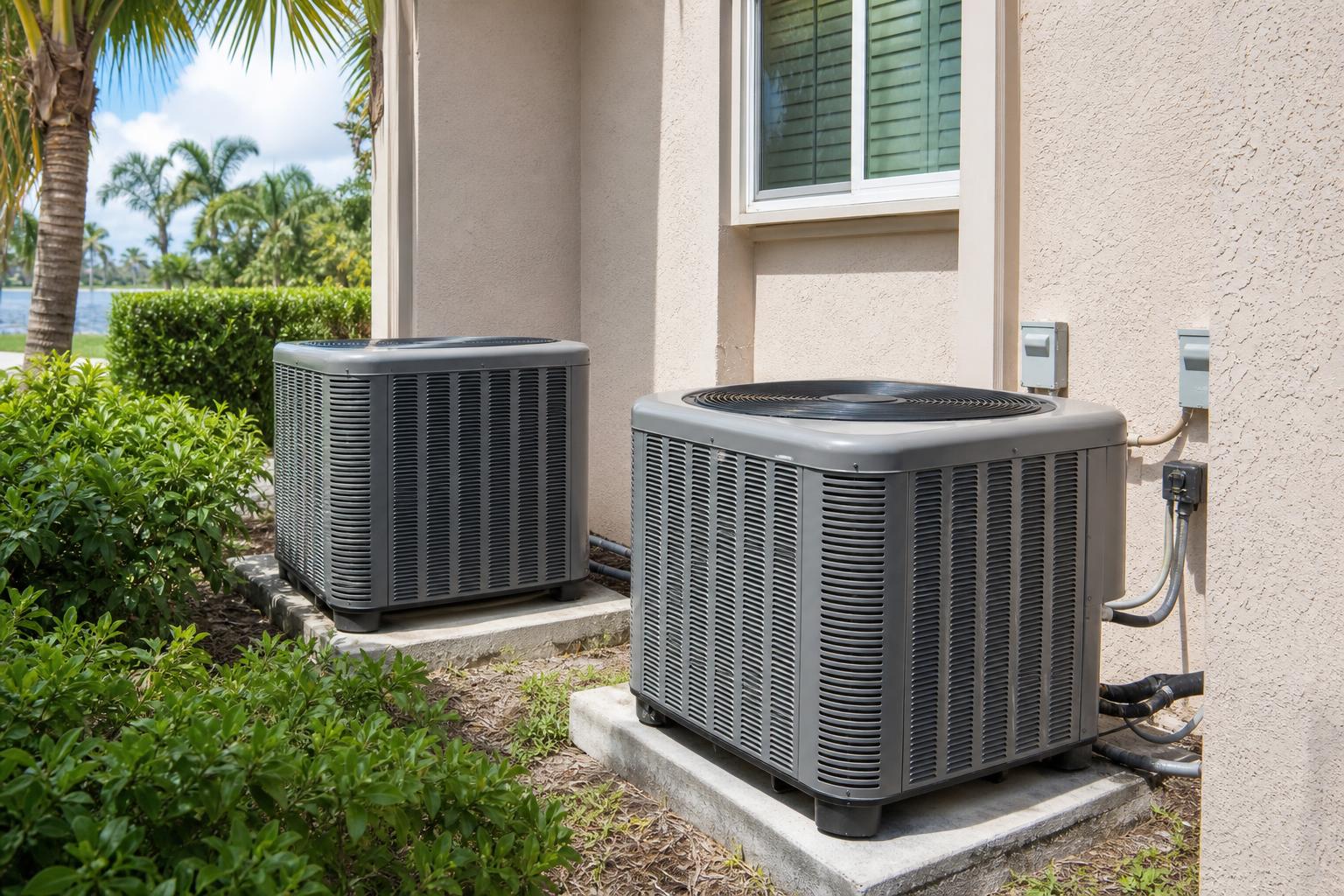
Is a heat pump or central air conditioner better for Florida homeowners? The answer isn't the same here as it is in the rest of the country. In most states, the heat pump debate centers on winter heating efficiency. In Florida, you'll be running your system in cooling mode for 8 to 10 months out of the year, and that single fact resets the entire calculation.
At Infinity Legacy, we install both heat pumps and central air conditioners throughout Northeast and Central Florida. What we've learned is that the right answer depends on a few very specific factors that many homeowners overlook. Below, we cover installed costs, efficiency ratings, humidity performance, lifespan, and every rebate currently on the table, so you're ready before you ever pick up the phone.
How these two systems actually differ (and where they behave the same)
A heat pump moves heat in both directions using a reversing valve. In summer, it pulls heat out of your home, just like a standard air conditioner. In winter, it reverses and pulls heat from outdoor air into your home. That eliminates the need for a separate gas furnace or electric strip heater. A central AC system only moves heat in one direction: out. In Florida's mild winters, this distinction matters far less than it does in Ohio or Michigan, but it still has real cost implications for all-electric homes.
Here's the part that surprises most homeowners: at the same SEER2 rating, a heat pump and a central AC cool your home in exactly the same way. The compressor, evaporator coil, and air handler work identically. You should not expect one label to outperform the other in cooling mode at equivalent specs. The performance gap that actually matters comes from somewhere else entirely.
The bigger difference is whether a system uses variable-speed or single-stage compressor technology, not whether it's labeled a heat pump or an AC. Variable-speed equipment runs at lower capacity for longer cycles, which has direct consequences for humidity control in Florida's subtropical climate. That distinction matters more to your daily comfort than almost anything else on a spec sheet.
What you'll actually pay to install each system in Florida in 2026
A standard central air conditioner replacement in Florida runs approximately $6,000 to $9,000 installed. That figure includes equipment, labor, and basic materials, and it assumes existing ductwork is in serviceable condition. Ductwork repairs or a full duct replacement add to the total and are worth evaluating before you commit to any system.
A comparable heat pump replacement typically runs $7,500 to $12,000 installed in Florida. The premium over central AC reflects the additional components, including the reversing valve and defrost system. For a typical 2 to 3-ton system serving a mid-size Florida home, most installations come in around $8,000 to $10,000 depending on brand, efficiency tier, and local labor rates.
The gap between these two systems is smaller than it looks on paper. When you factor in that a heat pump eliminates the need for supplemental electric strip heating, the effective cost difference shrinks considerably. Strip heat costs roughly three to four times more per delivered BTU than a heat pump running at typical Florida winter temperatures. For all-electric homes, a heat pump bundles two functions into one unit. Depending on the specific cost delta, your local utility rates, and runtime hours, the upfront premium may have a payback window in the range of several years, especially before rebates are applied. Ask your contractor to run those numbers for your specific home.
Energy bills, SEER2 ratings, and what the numbers mean for your wallet
SEER2 savings for Florida homeowners
Florida's residential electricity rates currently average around $0.14 to $0.16 per kWh, with FPL customers typically seeing effective rates closer to $0.12 to $0.14 and Duke Energy Florida customers closer to $0.158. Moving from a 14 SEER to a 16 SEER2 system saves approximately $150 to $200 per year on cooling costs for a typical 3-ton system. Upgrading further to a 20 SEER2 variable-speed unit can push annual savings to $300 to $400 or more.
Because Florida homes run their AC for 2,500 to 3,000 hours per year or more, efficiency gains compound significantly over a 12 to 15-year equipment life. That runtime is one of the strongest arguments for choosing a higher-efficiency system here versus a milder climate.
HSPF2 explained: don't let heating ratings drive your decision
HSPF2 measures a heat pump's heating efficiency, and Florida homeowners should not let this metric drive their decision. The heating season in Central and North Florida is short and mild. Moving from an 8 HSPF2 to a 10 HSPF2 unit saves roughly $40 to $50 per year on heating costs. Cooling efficiency, measured in SEER2, is where the real savings are.
Picking the right efficiency tier
For most Florida homeowners replacing a 10 to 15-year-old system, targeting 16 to 18 SEER2 hits the sweet spot between upfront cost and payback period. Premium 20-plus SEER2 systems make financial sense for larger homes, high-runtime households, or situations where strong utility rebates close the price gap. Don't buy more efficiency than your home can use. A well-insulated 1,500-square-foot home and a leaky 2,800-square-foot home have very different payback curves at the premium efficiency tier.
Humidity control, comfort, and how long each system lasts in Florida
In cooling mode, a heat pump and a central AC remove moisture from the air at the same rate if they share the same efficiency rating and compressor type. The homeowners who notice better dehumidification after switching to a heat pump usually had a variable-speed heat pump replace an older single-stage AC. The variable-speed compressor runs longer at lower capacity, giving the evaporator coil more time to pull moisture from the air. That is the real driver of improved comfort, not the heat pump label.
A well-designed central AC with variable-speed technology can match a heat pump's summer comfort performance. A basic single-stage heat pump will not automatically outperform a good central AC. If humidity control is your priority, look first for variable-speed compressor operation and a dehumidify mode. Those features matter more than which category the system falls into.
Beyond comfort, location also determines how long your equipment survives. Inland, with proper maintenance, both system types realistically last 12 to 15 years. In coastal communities, salt air and humidity accelerate corrosion, and lifespans of 8 to 10 years are common without protective coatings and consistent maintenance. Beachfront properties can see equipment degrade in as few as 5 to 8 years, which changes the cost-per-year math on premium systems considerably.
Heat pumps in Florida generally require two professional service visits per year because they run year-round for both heating and cooling. Central AC systems are typically serviced once a year, though twice-yearly checks are still recommended in high-humidity and coastal environments. Heat pumps also have more components to maintain, including the reversing valve and defrost system, which adds complexity to major repairs and can push service costs somewhat higher over the life of the unit.
Florida rebates, incentives, and financing options available right now
The federal Energy Efficient Home Improvement Credit (25C) expired for heat pump installations placed in service after December 31, 2025. For 2026 installations, you should not count on the 25C credit as part of your financial planning unless Congress extends it. Verify current federal program status with your tax advisor before you sign a contract.
Florida utility rebates are very much active and vary by provider. Current examples include:
- FPL: $200 for qualifying AC or heat pump systems
- Duke Energy Florida: up to $1,000 for conversions from electric strip heat to a heat pump
- TECO: $40 to $550 depending on equipment and efficiency tier
- JEA: $200 per qualifying heat pump installation
- Florida Public Utilities: $250 to $500 for qualifying upgrades
Utility rebate amounts change frequently, so confirm your specific incentive with your provider before purchase. Your contractor should be able to help you identify what stacks.
Florida's HEAR program, part of the IRA's Home Electrification and Appliance Rebates, covers up to $8,000 for a qualifying heat pump installation for income-eligible households. Eligibility is tied to your county's Area Median Income: households below 80 percent AMI can receive up to 100 percent of the qualified project cost, while households between 80 and 150 percent AMI can receive up to 50 percent. The Florida HEAR program has been approved but had no confirmed statewide launch date as of mid-2026, check current status with the Florida Department of Agriculture and Consumer Services before factoring this into your budget.
For homeowners who want to act on a system replacement without waiting on savings, PACE financing can remove that barrier. PACE programs generally allow financing with $0 down and no traditional credit requirement; the cost is repaid through your property tax bill over time. Terms vary by program and provider. When combined with available utility rebates and lower monthly energy costs, a new high-efficiency system can often pay for itself well within the financing period. Ask Infinity Legacy about current financing options available in your area.
Is a heat pump or central air conditioner better for your Florida home?
A heat pump is the stronger choice when your home currently uses electric strip heat, when you're upgrading an older low-efficiency system and want a single unit that handles all-season comfort, or when you qualify for utility rebates that meaningfully reduce the upfront premium. Variable-speed heat pumps also make the most sense for homeowners who prioritize humidity control and quieter operation. For anyone in Central or South Florida looking to maximize annual cooling efficiency, a ducted heat pump with variable-speed technology is hard to beat.
A central air conditioner makes sense when you already have a gas furnace in good condition and only need to replace the cooling equipment, or when budget constraints make the lower installed cost the practical choice. At the same SEER2 rating, a well-installed central AC delivers identical cooling performance. There's no reason to pay for a heat pump's heating capability if you already have a working heating solution.
The only way to know whether a heat pump or central air conditioner is better for your Florida home is to have a contractor evaluate your ductwork, square footage, insulation, sun exposure, and current equipment. Infinity Legacy offers free in-home consultations and installs both heat pumps and central air conditioners throughout Northeast and Central Florida. You get an honest recommendation based on your home's actual numbers, not a sales pitch for whichever unit carries the higher margin.
The bottom line for Florida homeowners
For most Florida homeowners, a variable-speed heat pump at 16 to 18 SEER2 or higher offers the best combination of cooling efficiency, humidity control, and all-season capability. The upfront cost premium over central AC is real, but available utility rebates and lower operating costs typically close that gap within several years. For homeowners replacing cooling-only equipment while keeping an existing gas furnace, a high-efficiency central AC at the right SEER2 rating remains a solid, cost-effective option that delivers identical summer comfort.
If you're in Northeast or Central Florida and ready to move forward, we walk you through every available rebate, handle permits and inspections under one contractor license, and give you a transparent quote before you commit to anything. Free estimates are available, and PACE financing options mean a newer, more efficient system doesn't have to wait on your savings account. Call us or schedule online to get a full assessment for your home.